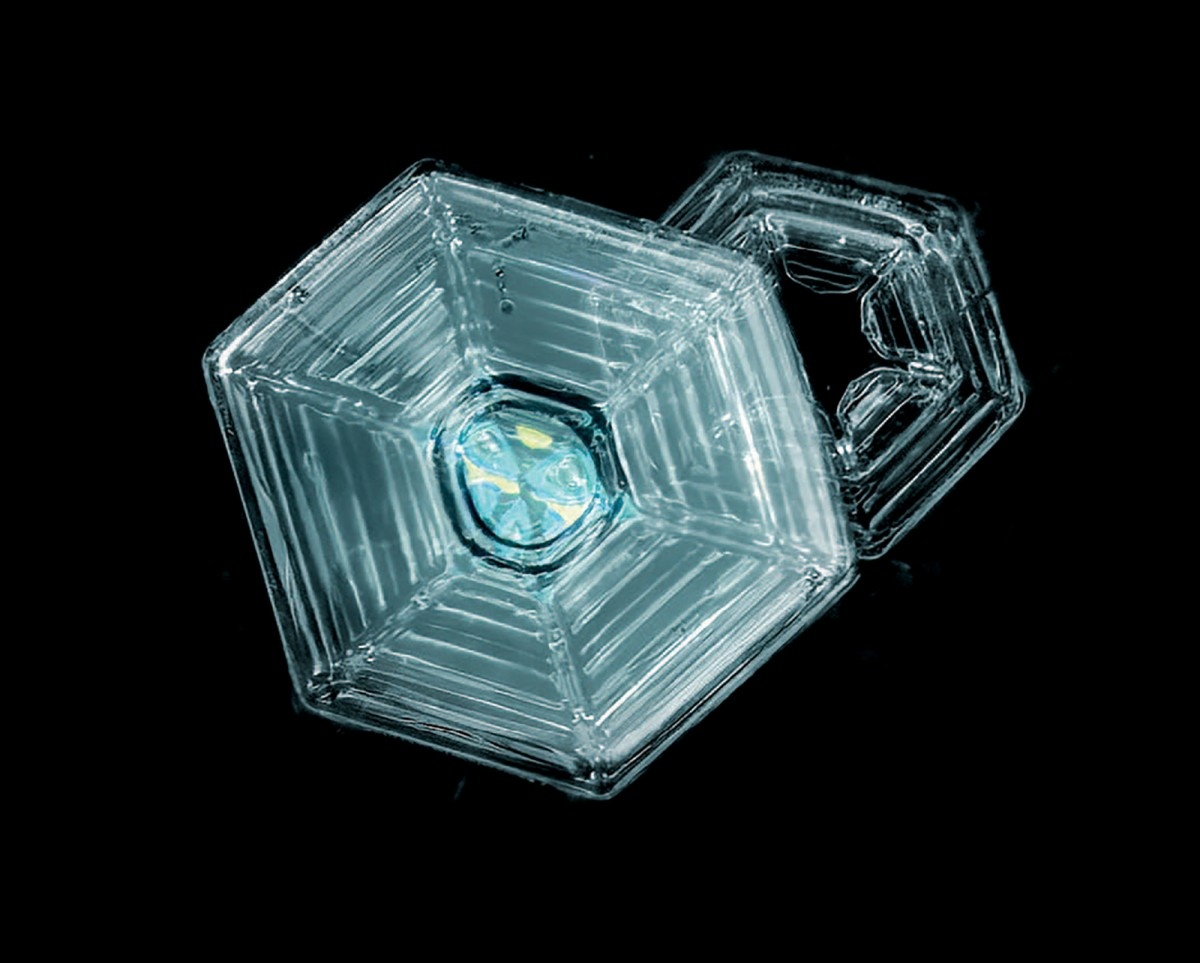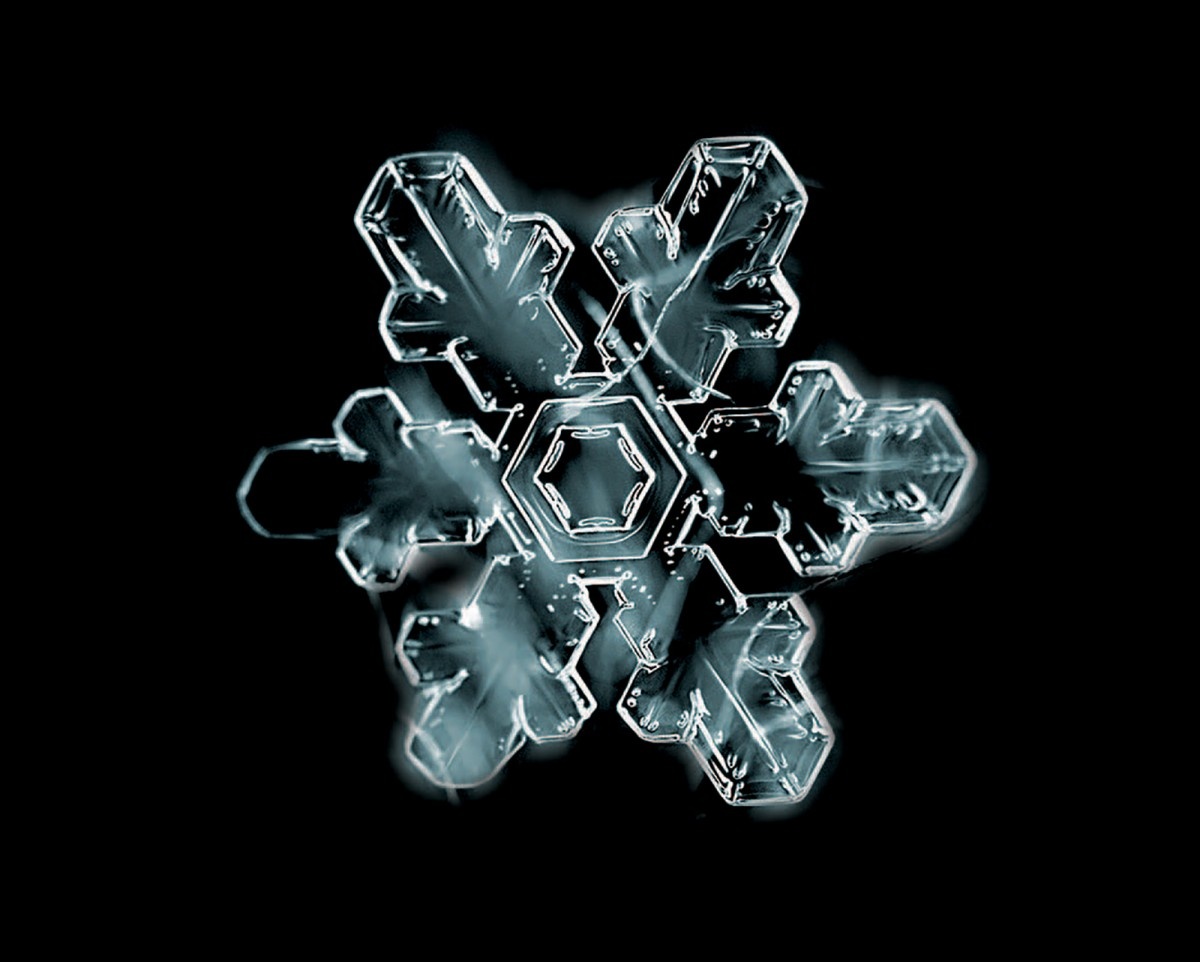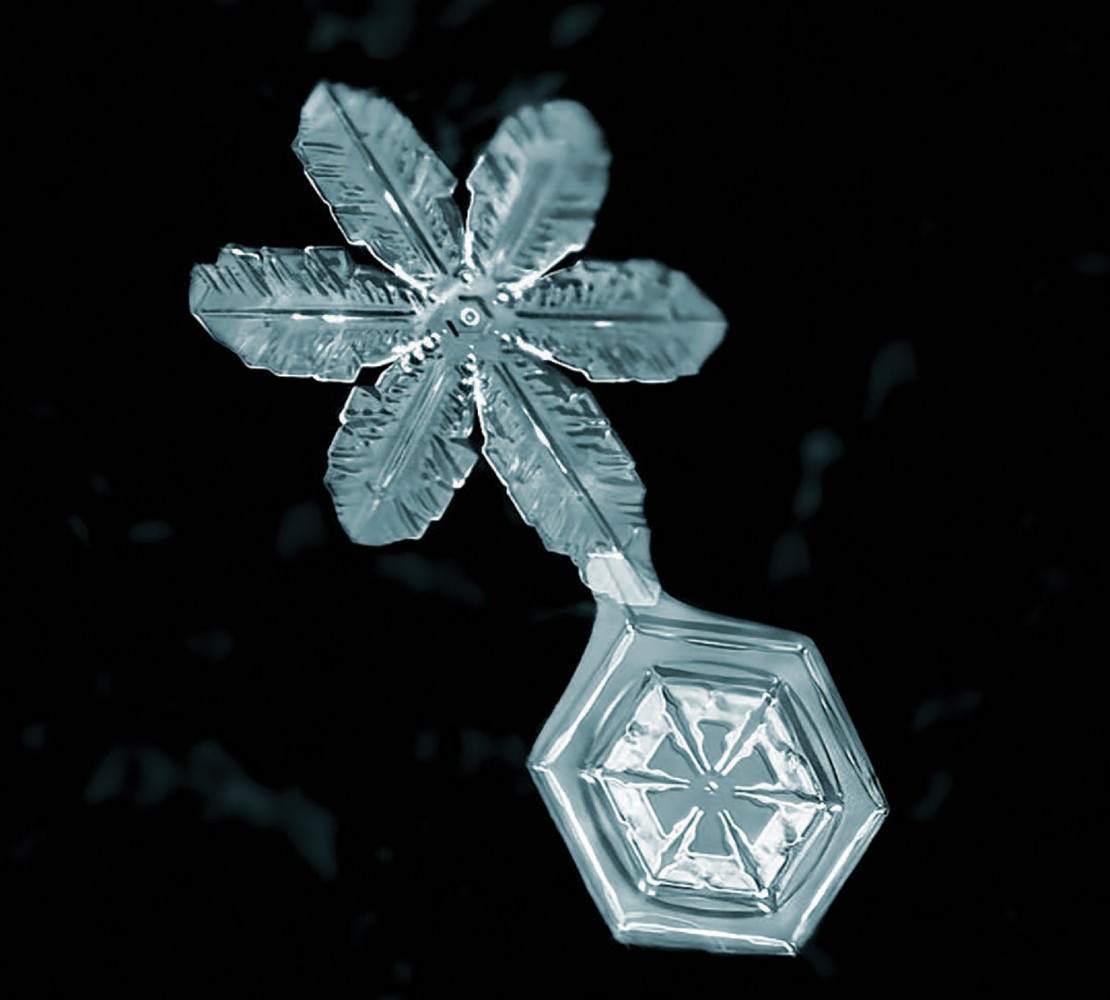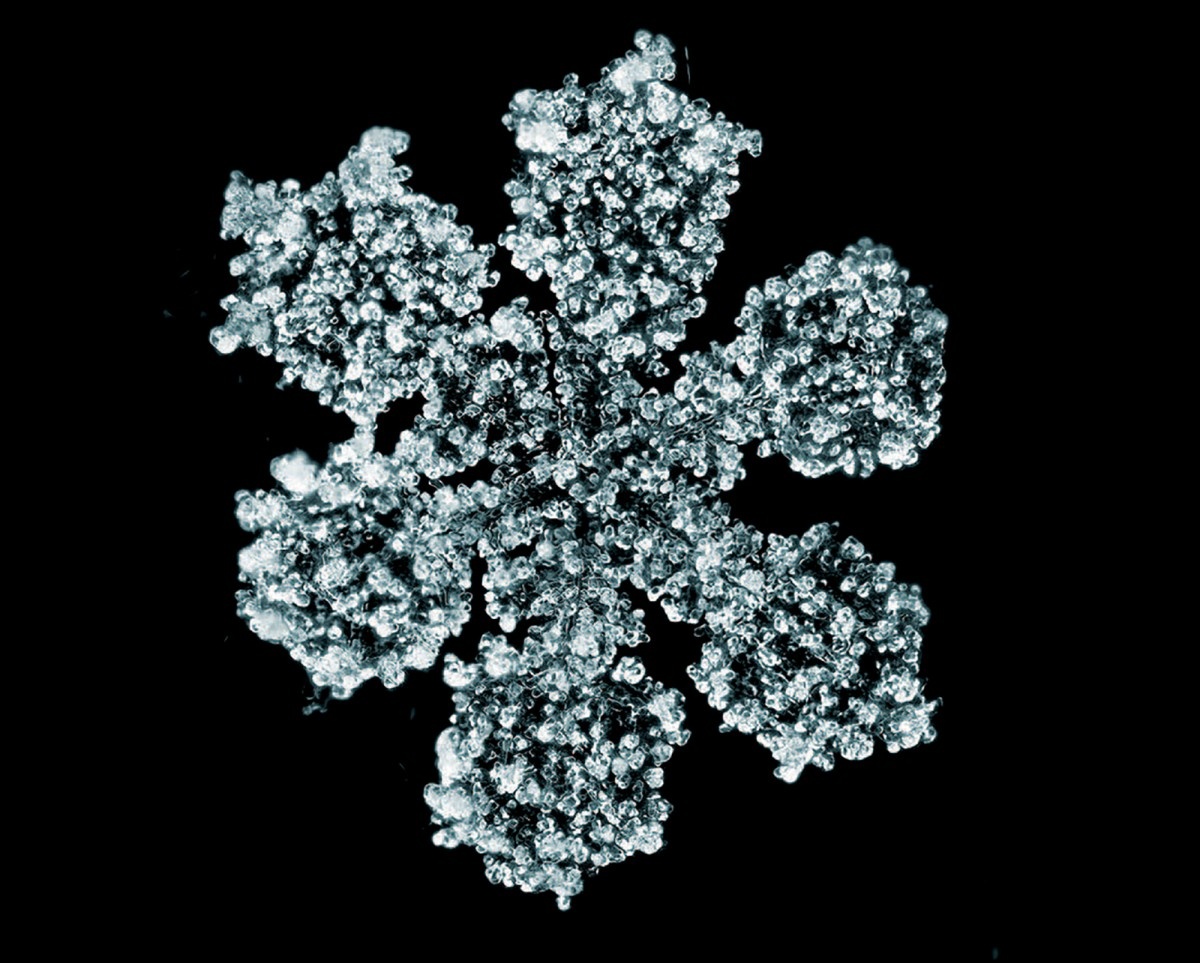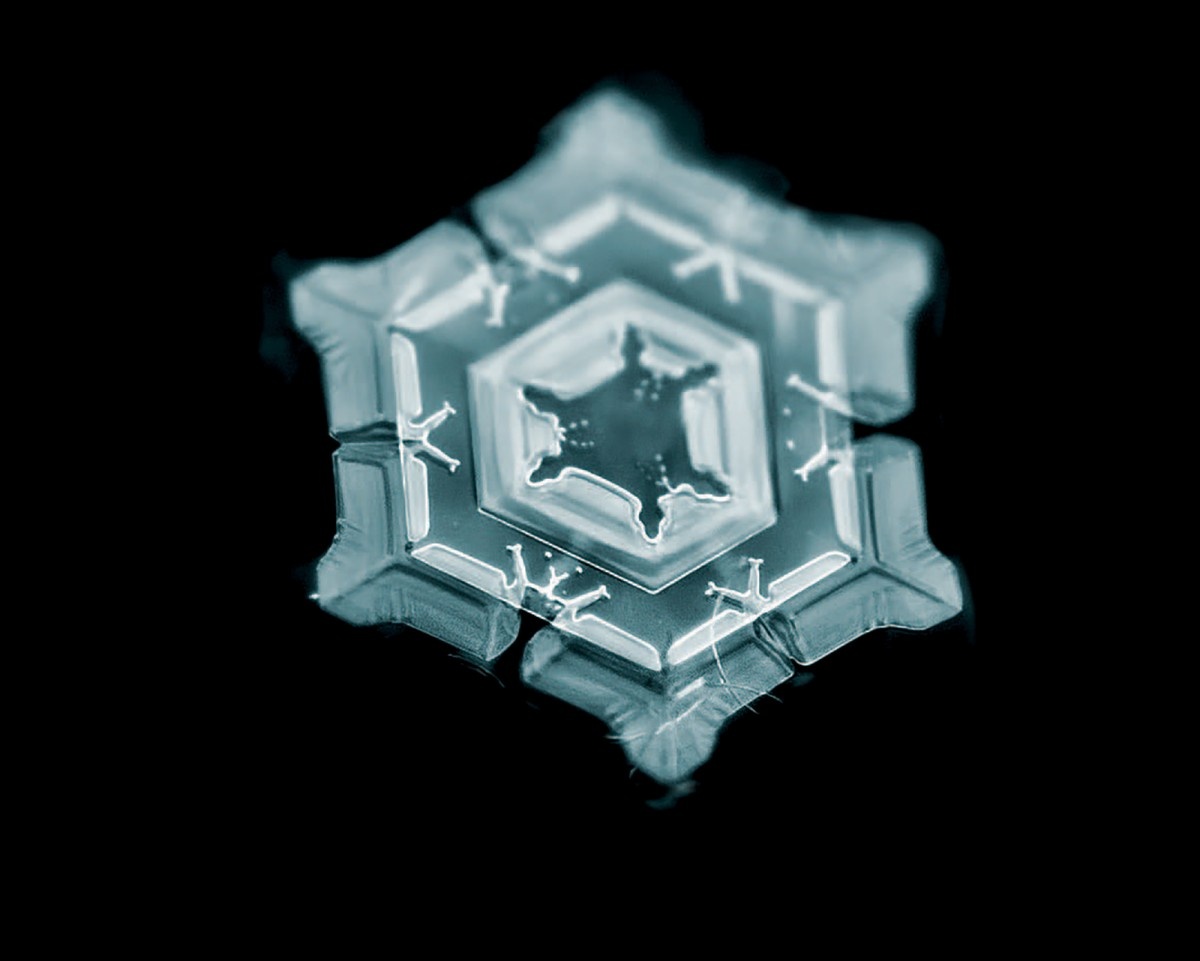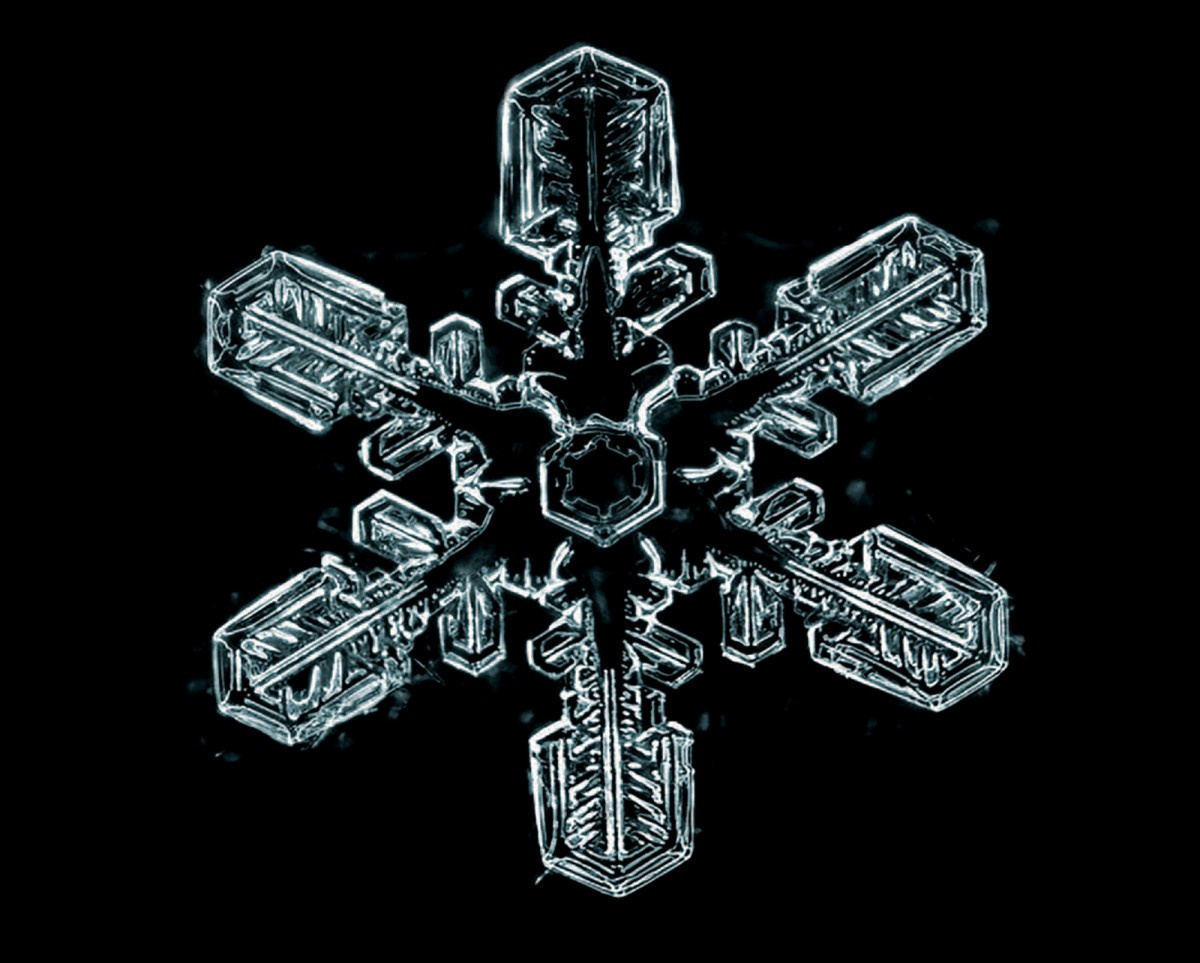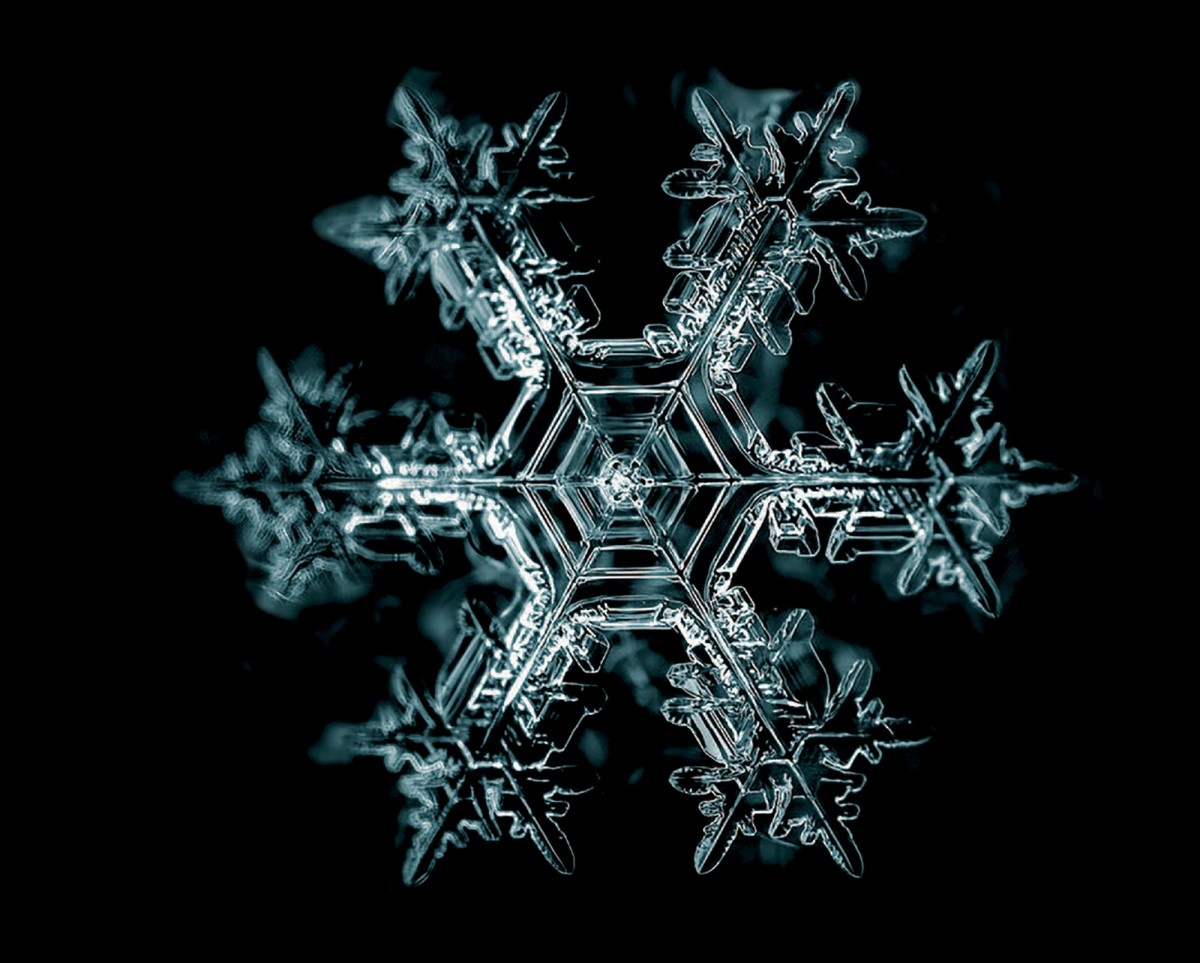

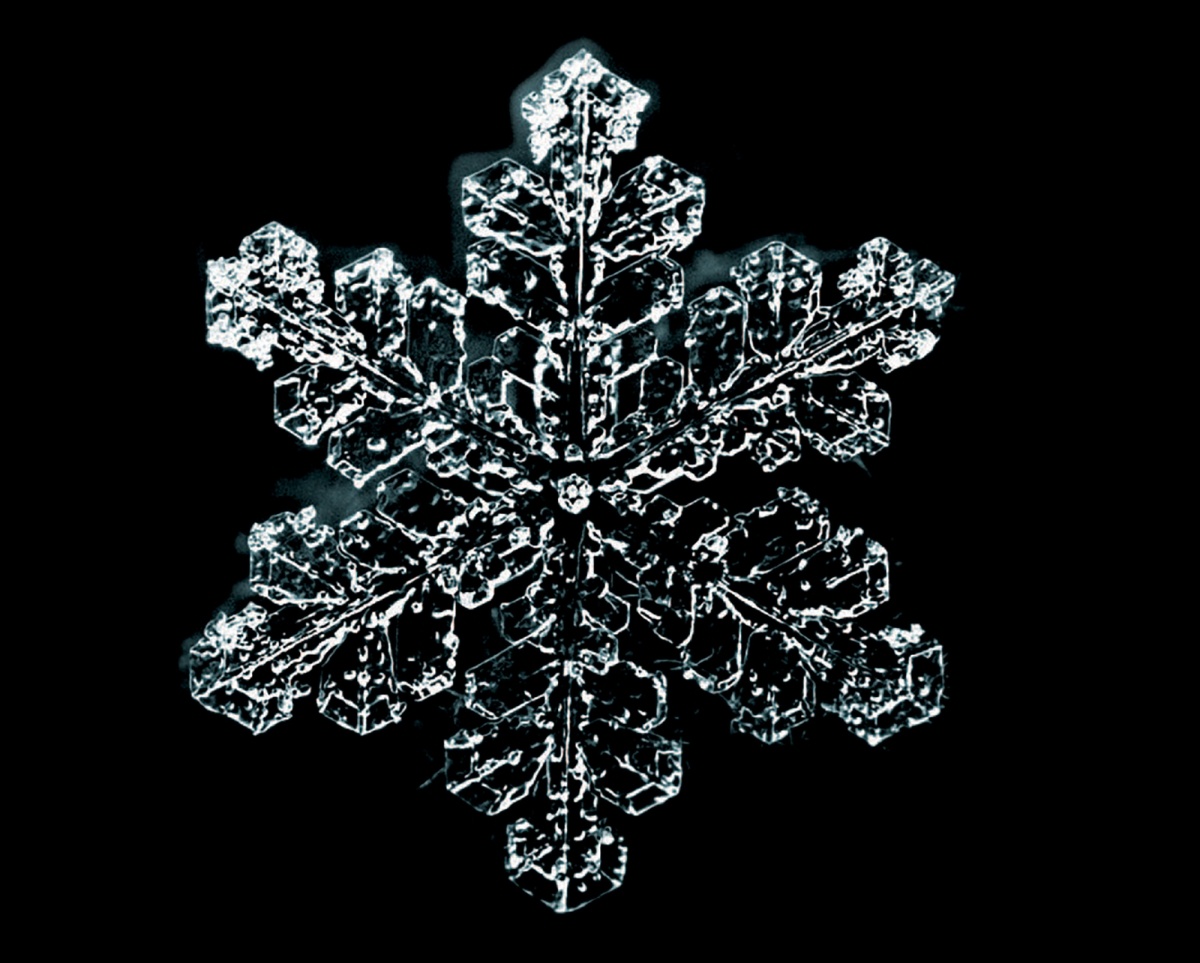
Having honed his photography skills by focusing on warm weather findings, Brent Haglund found himself, a few winters back, searching for something to aim his camera toward during the colder months. He settled on a photographic study of the intricate shapes of snowflakes. When snow falls and the mood strikes, Haglund will set a small table under open skies and lay a black microfiber glove there to catch the flakes.
“Previously, I had thought of snowflakes as two-dimensional objects,” Haglund said. “But in photographing them, I realized they come in many three-dimensional shapes, such as columns, barrels, bullets, and funnels. I also had thought all snowflakes adhered to the same six-pointed arms shape. Most surprising to me was that some snowflakes have no arms at all.”
He uses a Canon MP-E 65mm camera lens, which magnifies up to 5 times, to capture his snowflake images. “I will take a burst of photos while advancing the focus ring ever so slightly in order to capture multiple slices of focus, which I later merge in Photoshop to create a single composition where much of the snowflake is in focus edge-to-edge,” Haglund said. “If none of the snowflakes appeal to me, I shake the glove clean, like an Etch A Sketch®, and let new snowflakes gather before resuming my hunt.”
Windless days with light snowfall and temperatures ranging from 10 to 20 degrees are best for this photographic endeavor, Haglund said: “If the snow is too heavy, the snowflakes overlap or clump up and can’t be photographed individually. The types of snowflakes occurring outside that temperature range are either fragments and needles or dendritic flakes I deem too large to photograph.”
Here are some of his favorite snowflake shots.
—Meghan McCarthy McPhaul